Does My Roof Need to Face South for Solar Panels?
Last reviewed and updated:
A common myth is that solar only works on a south-facing roof. South is indeed the ideal, but it is far from the only option — east and west-facing roofs perform well, and for some households they are actually preferable. Here is what direction and pitch really mean for your output.
Why south is the benchmark
In the northern hemisphere the sun tracks across the southern sky, so a south-facing roof receives the most daylight across the day and produces the highest annual output. If you have an unshaded, south-facing roof at a sensible pitch, you have the best possible starting point. But "best" does not make everything else "no good".
East and west roofs work well
East and west-facing roofs typically generate around 15% less than an equivalent south-facing roof over a year. That is a modest reduction for what remains a very worthwhile system. There is also a hidden advantage: an east-facing array peaks in the morning and a west-facing one in the afternoon and evening, so an east-west split spreads generation more evenly across the day. For a household that uses electricity in the morning and evening rather than at midday, that spread can mean you use more of your own power directly — which is exactly what improves your savings.
What about north-facing roofs?
A north-facing roof is the weakest option and usually produces too little to justify the cost on its own. If your only available roof faces north, solar may not be the right choice — though a different roof plane, a flat roof with angled mounts, or a ground-mounted array could be alternatives worth discussing. An honest installer will tell you when a roof simply does not stack up.
Roof pitch
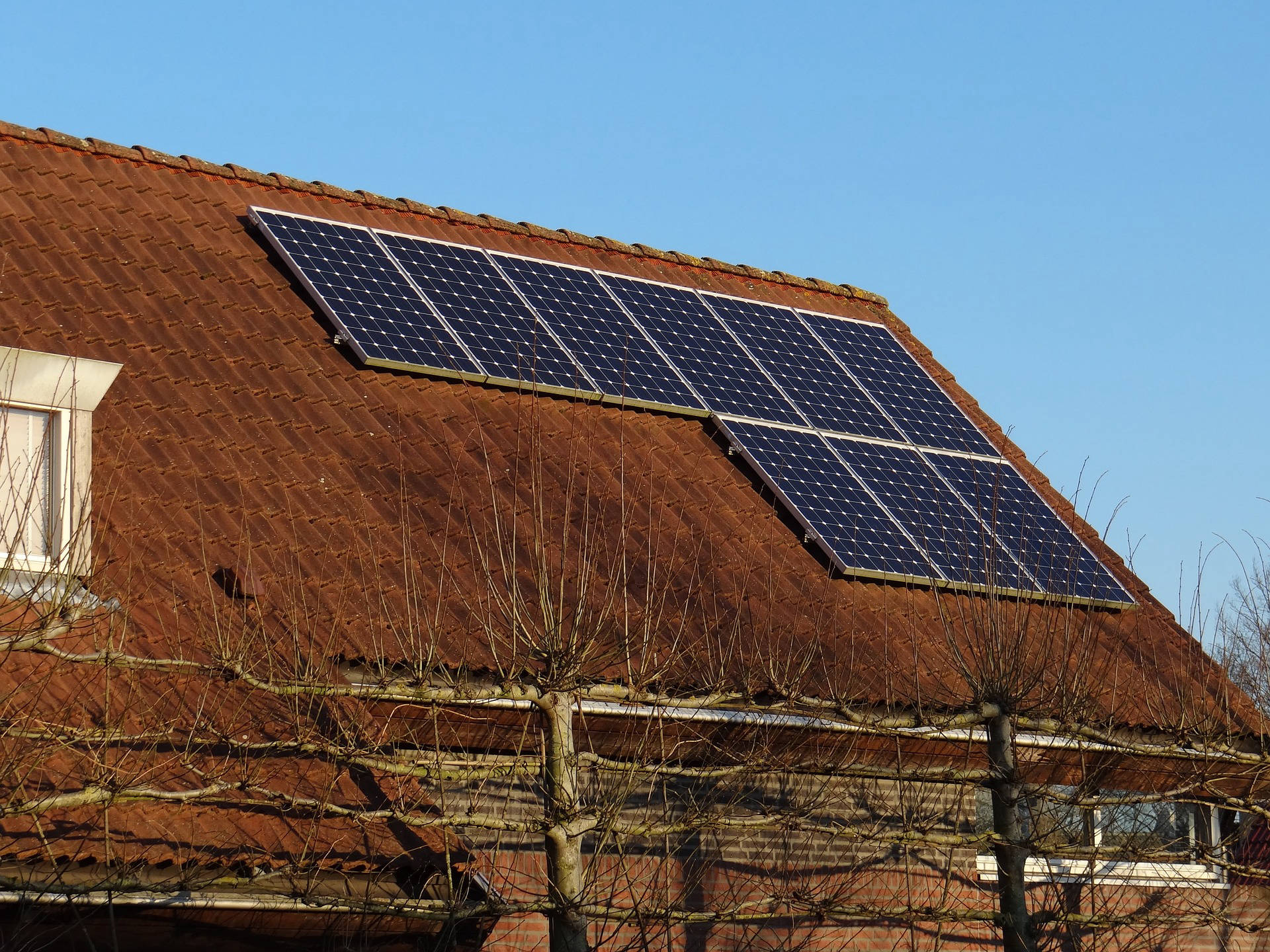
Pitch is the angle of your roof. For UK latitudes, a pitch of roughly 30 to 40 degrees is close to ideal, which conveniently matches a great many British homes. Shallower or steeper pitches lose a little output but are still perfectly usable. On a flat roof, panels are mounted on angled frames to achieve a good tilt, and may be spaced to avoid shading one another.
Shading matters more than direction
Here is the point most homeowners underestimate: shade is a bigger enemy than orientation. A chimney, a neighbouring building, a tall tree or even a satellite dish casting shadow across panels can reduce output significantly, because with a conventional string inverter, shading on one panel can drag down the whole string. The good news is that this is solvable. Power optimisers or micro-inverters allow each panel to perform independently, limiting the impact of partial shade. A proper site survey will assess shading across the day and seasons and recommend the right approach. See what is shading for more.
Getting it right for your home
The only reliable way to know how a particular roof will perform is a survey that considers its direction, pitch, available area and shading together, then models the expected annual output. Beware of anyone quoting a headline figure without seeing your roof. With that survey in hand, you can judge whether the expected generation justifies the cost — and in the great majority of cases, south, east or west-facing roofs comfortably do.
Mixing roof faces and "in-roof" options
Many homes do not have one large, perfectly oriented roof slope, and that is fine. Installers can place panels across more than one face — say some on an east slope and some on a west — and modern systems handle the differing outputs well, especially with power optimisers. If appearance matters to you, ask about "in-roof" (integrated) mounting, where panels sit flush within the roofline rather than on top of the tiles. It costs a little more and is most easily done during a re-roof or new build, but it gives a sleeker finish that some homeowners prefer, particularly on prominent front-facing roofs.
Seasonal and daily variation
Whatever direction your roof faces, output naturally varies through the day and year. A south-facing array produces a strong midday peak; east and west faces give gentler peaks in the morning and afternoon. Across the seasons, summer generation far exceeds winter. None of this is a problem — it is simply how solar works — but it explains why your own usage pattern matters. If you are out at midday, an east-west spread or a battery helps you capture more of the value; if you are home and using power through the day, a south-facing array suits you well.
Don't rule yourself out too soon
The practical message is encouraging: unless your only roof faces firmly north or is heavily shaded for most of the day, solar is very likely viable. Far too many homeowners assume they need a textbook south-facing roof and never even ask. A short survey will tell you exactly what your roof can do, and in the large majority of cases the answer is positive. See also when a roof is genuinely unsuitable.
The simple takeaway
To sum up: south is best, east and west are very good, and only north-facing or heavily shaded roofs tend to fall short. Pitch matters a little, shading matters a lot, and the timing of your generation can be as valuable as the total amount. The single most useful step is a proper survey that models your specific roof and usage — with that in hand, you will know exactly where your home stands rather than relying on rules of thumb.
If you are still weighing things up, remember that small adjustments at the design stage can make a real difference: adding optimisers to shaded panels, splitting an array across two faces, or repositioning around a chimney can all recover output that a crude layout would lose. This is exactly the value a thoughtful installer adds over a box-ticking one, and it is why the survey stage rewards the time you give it.